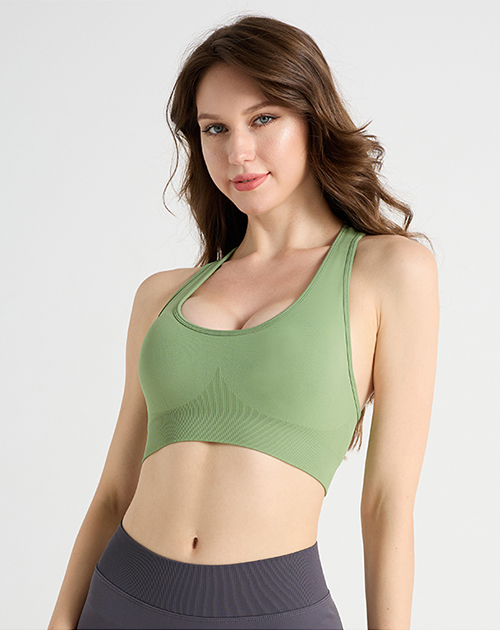
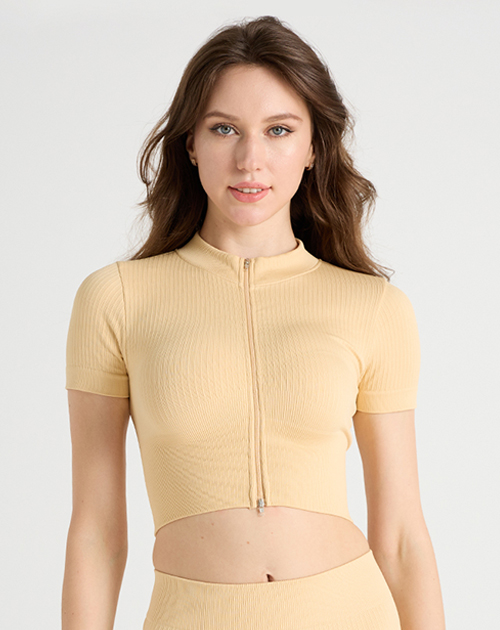
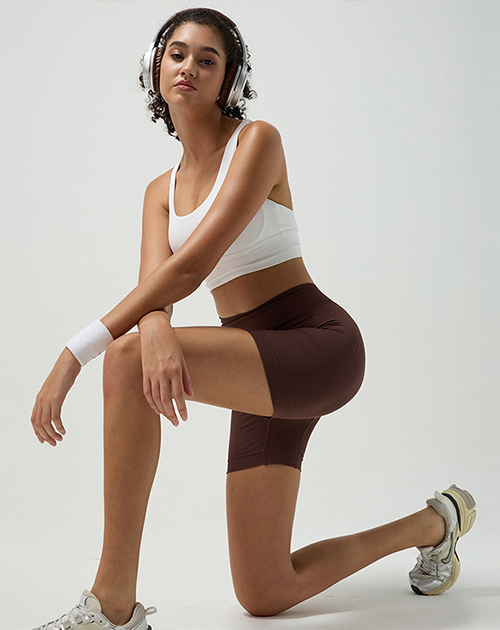
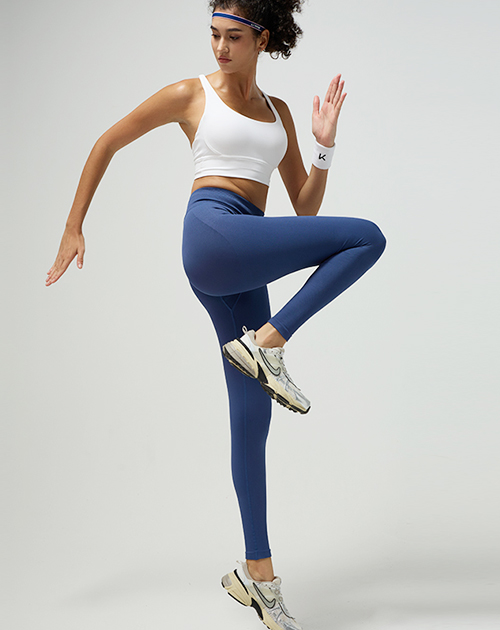
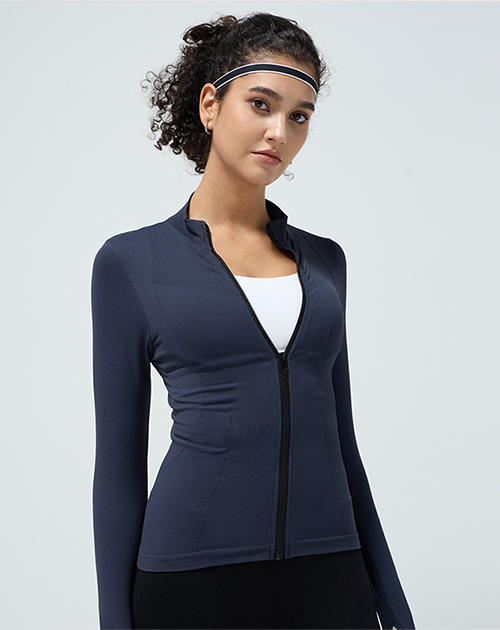
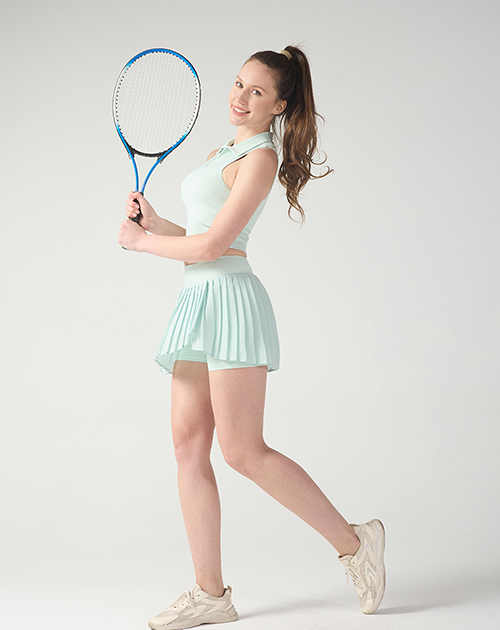
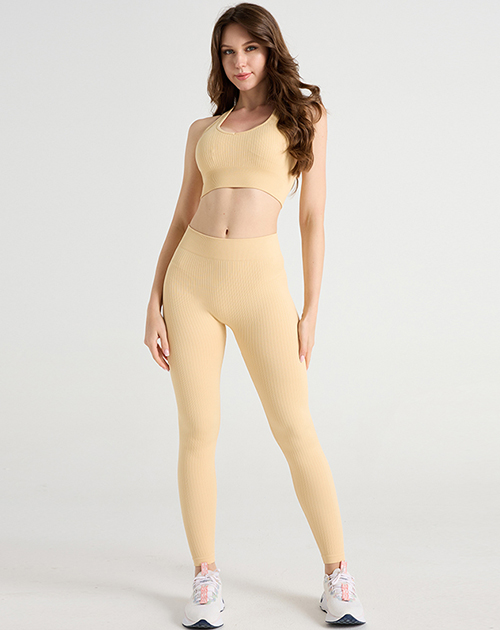
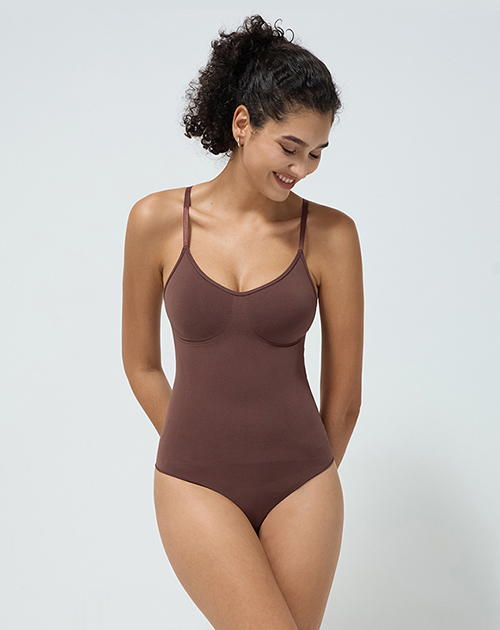
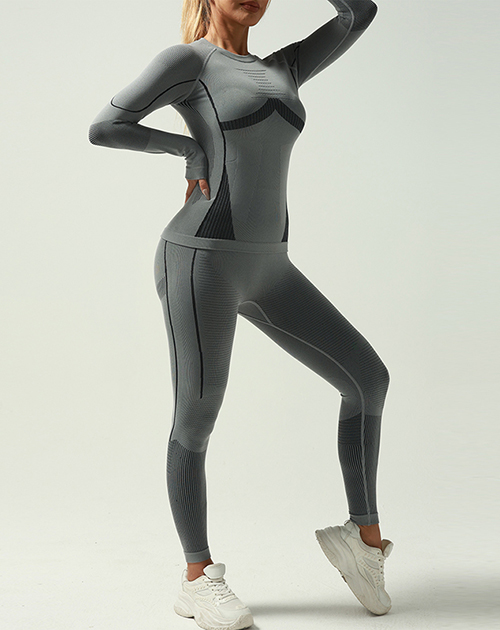
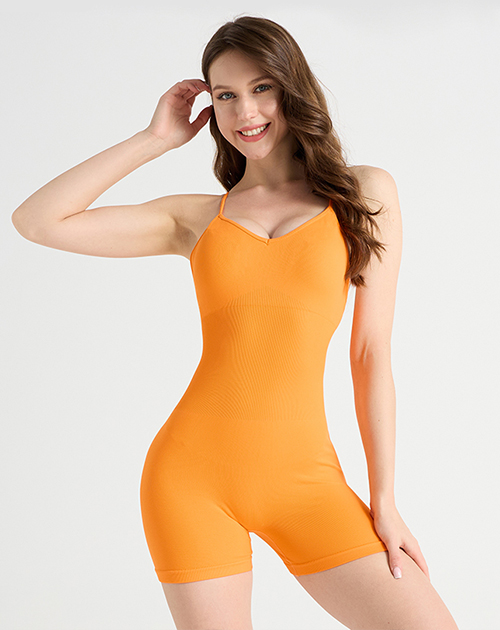
You pull on a pair of leggings and something just feels off. Maybe a seam digs into your inner thigh mid-lunge, or the waistband folds the moment you forward fold. That frustration is exactly why so many women have started looking at Seamless Yoga Sets, which are built from the ground up to avoid those pressure points. But here is the thing: seamless is not automatically the answer for everyone. Understanding what actually makes them different, and when they genuinely outperform traditional styles, is what this article is here to work through.
Forget the marketing language for a second. Structurally, seamless means the fabric is knit in a continuous circular motion, essentially forming a tube rather than a series of panels that get cut and stitched together afterward.
Think of it less as a magic claim and more as a construction philosophy. The goal is to reduce the moments where your skin registers the garment as something separate from your body.
Most sets pair a sports bra or crop top with matching leggings or shorts. Both pieces share the same knit structure, which matters more than it might seem. When the top and bottom are cut from different fabrics, even subtle differences in how they stretch can make an outfit feel mismatched in motion, not just visually.
A matched set sidesteps that. The fabric drapes the same way, recovers at the same rate, and reads as one cohesive thing when you move. For anyone who finds activewear shopping frustrating precisely because tops and bottoms never quite feel like they belong together, this is a real practical benefit, not just an aesthetic one.
This comparison gets oversimplified a lot. Let the table do the heavy lifting before diving into nuance.
| Feature | Seamless Leggings | Regular Leggings |
|---|---|---|
| Construction | Circular knit, minimal cuts | Panel-based, cut and sewn |
| Seam placement | Reduced or hidden | Visible at inner leg, seat, waist |
| Against the skin | Smooth, adapts to movement | More structured, slight texture |
| Stretch quality | Uniform, wraps the body | Varies by fabric type and cut |
| Compression style | Even, gentle pressure | Can target specific zones |
| Body-shaping effect | Soft silhouette, flowing lines | Panel lines define and contour |
| Where they work well | Yoga, Pilates, casual days | Running, heavy lifting, sport |
| Opacity reliability | Depends on knit density and shade | Depends on fabric weight and shade |
The takeaway: these are not competing products trying to do the same job. They are designed around different priorities, and the one that works for you depends almost entirely on how you move and what you expect activewear to do.
Comfort is subjective, so let's be specific instead of vague.
Here is an honest observation: some people find the very softness of seamless fabric unsettling. If you are used to leggings that feel like a firm hug, a seamless knit can feel almost too light, like you are not quite wearing anything. Neither reaction is wrong. It just tells you something about what your body has learned to expect.
It depends on what you are doing. And not in a vague, hedge-everything way.
These are the scenarios where seamless construction genuinely earns its place. Wide-legged poses, deep hip openers, twisted seated stretches. In all of these, the absence of inner seams means there is simply less fabric friction working against you. The soft compression also means you are not fighting the garment to get into deeper positions.
This is where seamless styles can feel a bit less grounded. The uniform stretch that makes them so comfortable in static or slow movement can feel less stable when you are moving fast and repetitively. Paneled leggings with structured compression zones tend to hold muscle groups more deliberately during runs.
That said, a denser seamless knit in a dark color can absolutely handle moderate cardio. It is mainly at higher intensities or longer distances where the structural difference starts to matter.
Honestly, either works. The more relevant question is squat-proof coverage and waistband stability. A wide, non-rolling waistband matters here regardless of which construction you choose. Lighter seamless knits in pale colors are the main thing to avoid when loading up a barbell.
There is a specific kind of activewear buyer who will immediately get along with seamless sets.
None of this is about body type or fitness level. It is about what you want your clothes to feel like.
Worth saying plainly: paneled leggings are not the inferior option. They are just different.
Two of the most common anxieties, and both deserve a straight answer.
Sheerness is about knit density and color, not just brand or price. Light colors, especially white and pale pink, are inherently higher-risk in any thin fabric. Do the pinch test: grab a section of fabric and gently stretch it. If the fibers pull apart and you can see light through them clearly, that pair will be sheer during squats.
Darker shades (charcoal, navy, forest green, deep burgundy) hold up significantly better. Mid-tones like sage or dusty rose sit somewhere in between, depending on the specific knit.
Close-fitting is how these are designed to feel, but there is a clear line between snug and uncomfortable. Watch for:
Less list-ticking, more knowing what actually matters.
Fabric blend shapes everything else. Nylon-spandex holds shape longer and resists the fuzzing that happens after repeated washing. Polyester-spandex tends to be lighter and pulls moisture away faster. Higher spandex ratios (around 20% or above) give you more stretch with better recovery.
The waistband is either going to be the thing you love or the thing that ruins the whole outfit. Wide, high-rise bands that lie flat tend to stay put. If you have a shorter torso, check that a high-rise style does not sit uncomfortably near your ribcage.
Breathability versus coverage: these are in tension with each other in seamless knits. Open, textured knits feel lighter and more ventilated but are more likely to be sheer. Dense, smooth knits cover better but can trap heat. Know which trade-off matters more to you.
The top's support level matters as much as the legging. Some sports bras in matched sets are designed for low-impact movement only. Check the listed impact level before assuming a cute matching set works for everything.
The reason seamless sets get worn more than most activewear is that they look natural in contexts that are not a gym.
For the gym itself, a zip-up jacket and clean sneakers are enough to make the outfit feel intentional. Keep accessories minimal. The look works because of its simplicity, not despite it.
Off the mat, the easiest transition is layering. An oversized button-down shirt worn open over a sports bra shifts the whole register of the outfit. So does swapping sneakers for loafers. Small changes, big shift in how it reads.
On color choices:
The pieces that get the most wear tend to be the ones that do not look like they are trying too hard in either direction.
Elastic fibers are finicky, and seamless knits often have a higher percentage of them than regular leggings.
These habits are not complicated. They just require a small shift in how you approach laundry. The payoff is activewear that holds its shape through significantly more wears.
Three questions cut through most of the confusion:
What are you primarily doing in them?
What does comfort mean to you specifically?
How much versatility do you need?
Activewear decisions get overcomplicated. At the end of the day, the legging you wear consistently is the one that was worth buying. If you are newer to all of this and want a starting point that is comfortable, easy to style, and forgiving across different activities, a seamless set is a reasonable place to land. Pay close attention to waistband feel, fabric density, and how the pair responds when you actually move in it. Ignore the rest of the noise. The fit and feel in the first five minutes of trying something on will tell you more than any product description. And when you do find a construction your body agrees with, building out from there becomes genuinely easy. Curious about how fabric blends affect long-term wear and comfort? The next piece goes deeper into what nylon, polyester, and spandex ratios actually mean for your leggings beyond the first few washes.
Copyright © Jinhua Yongxing Knitting Co., Ltd.
 Seamless Yoga Sets


 English
 русский
 Español