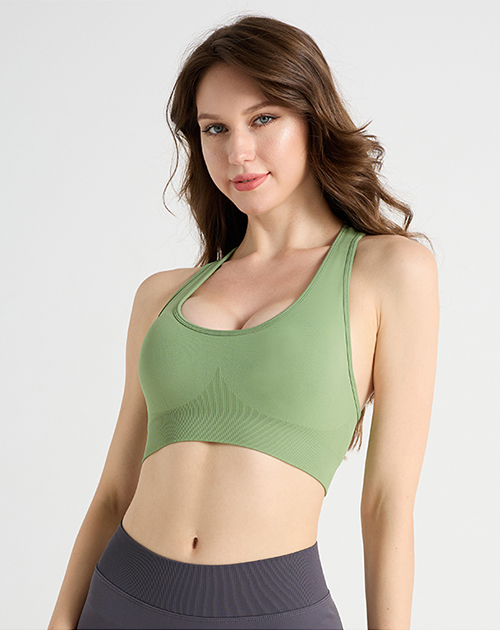
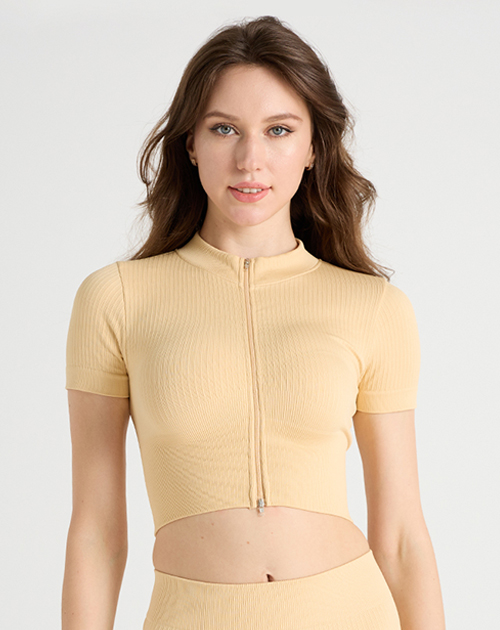
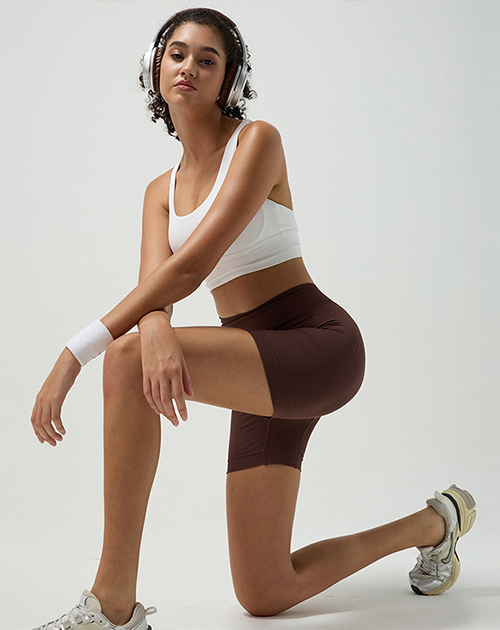
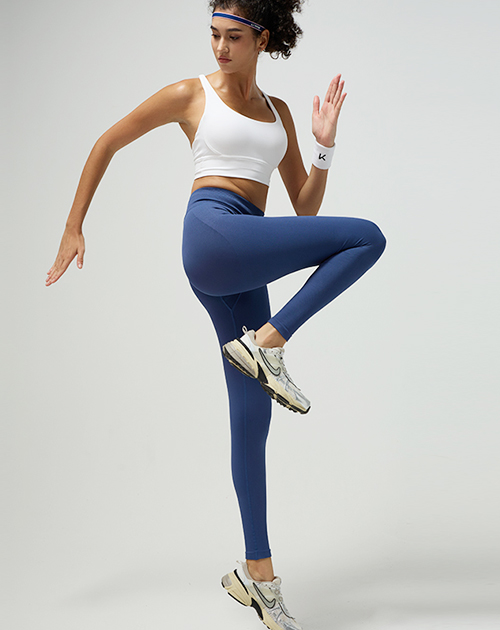
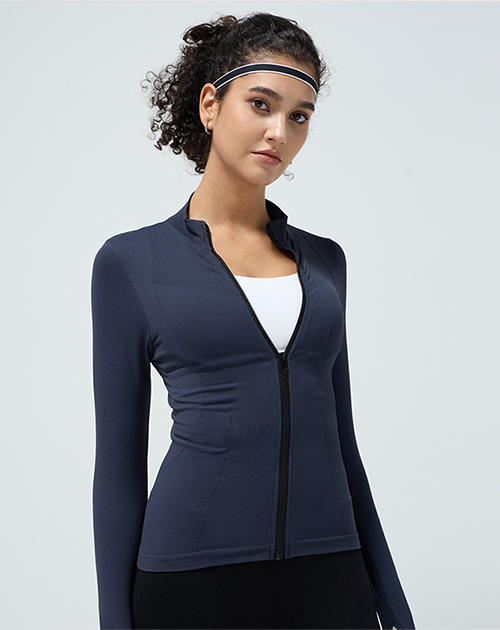
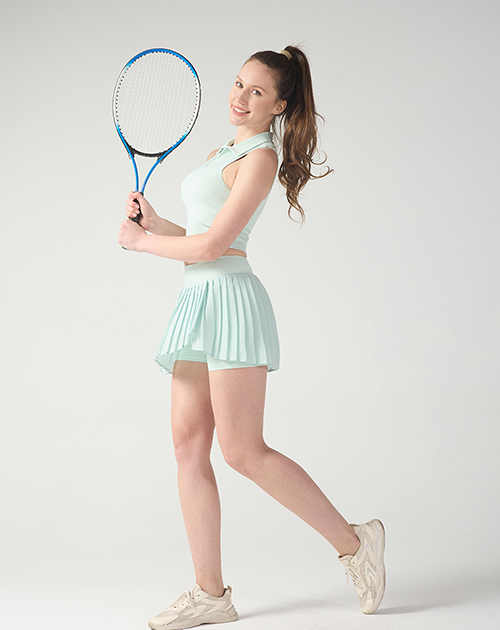
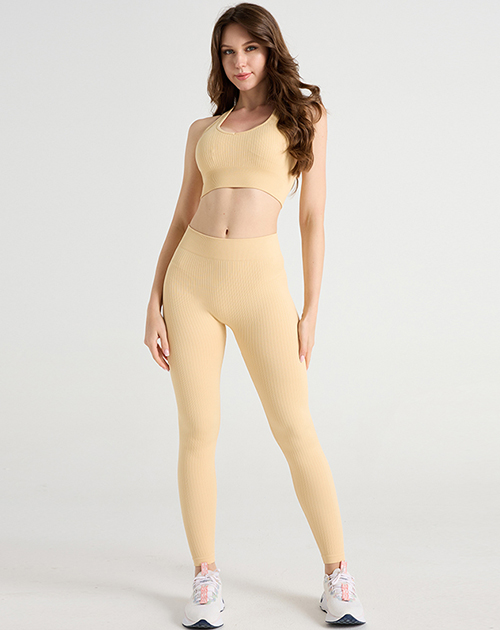
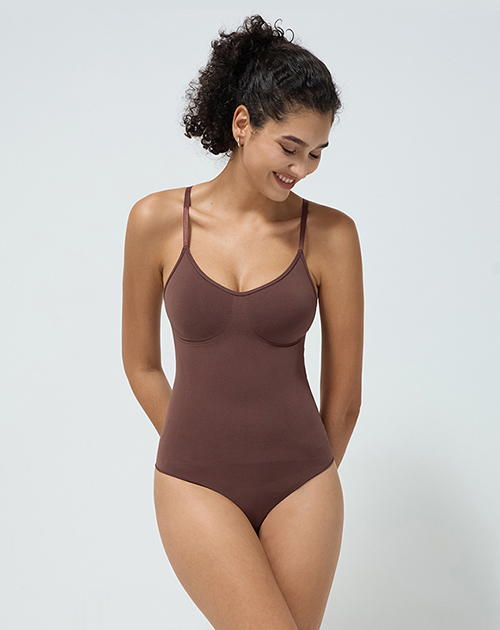
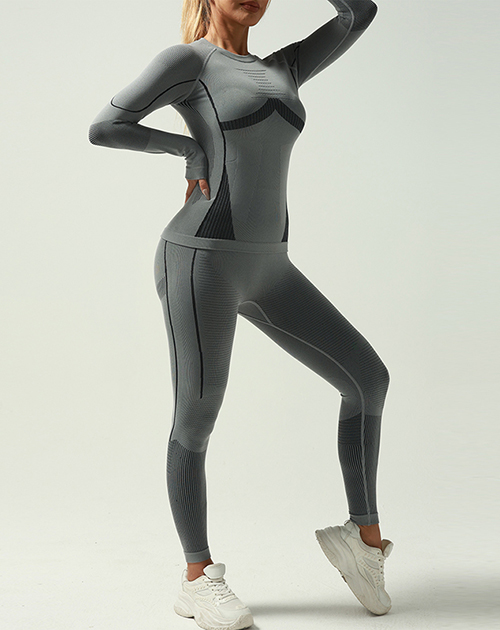
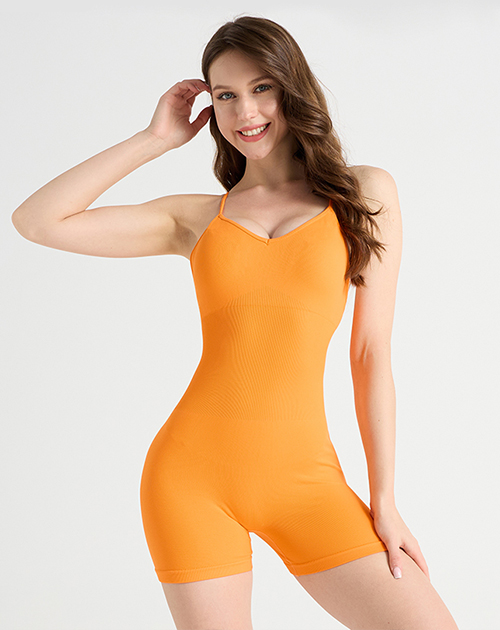
Modern fitness apparel has changed in ways that go far beyond aesthetics. It's not just about looking good in the studio anymore — it's about whether your clothing actually helps you move better, recover faster, and stay focused when the session gets hard. That shift in priorities has pushed a lot of athletes and everyday practitioners toward Seamless Yoga Sets , and for reasons that make more sense the longer you train in them. The texture feels different. The fit behaves differently. And after a few weeks, going back to conventional stitched gear starts to feel like a step backward.
Here's the short version: seamless yoga sets are coordinated activewear — leggings and a sports bra or crop top — made without the traditional seams that run along the sides and inner thighs of standard athletic clothing. That's the definition. But definitions don't really capture why it matters.
Think about how regular sportswear is made. Flat fabric gets cut into shapes — front panel, back panel, side panels — and stitched together at the edges. Those stitch lines become ridges. Raised threads running along your hips, your outer thighs, the sides of your torso. During a casual walk or a light stretch, you might not notice them at all. But hold a deep pigeon pose for two minutes, or move through sixty minutes of sweaty vinyasa flow, and those seams start making themselves known. They press. They shift. They create small, persistent points of irritation that quietly pull your attention away from where it should be.
Seamless yoga sets are built on circular knitting machines instead. The fabric forms as a continuous tube — no panels, no stitching, no structural weak points where tension accumulates. What's more, the knitting process allows for deliberate variation across the garment: denser weave through the waist for support, softer and more yielding through the hips, mesh panels where ventilation counts. All of it programmed into the knit itself, without a single additional seam. It's a genuinely different way of thinking about what clothing is supposed to do.
The honest answer is: gradually, then obviously.
Friction reduction is what people tend to notice fast. No seam ridges against skin means no irritation during repetitive motions — no unconscious bracing, no mental note to readjust after the next rep. Shape retention works differently too. Because circular knitting allows tension to vary across specific zones, the garment provides targeted support rather than blanket compression. The waistband holds firm. The fabric through the thighs moves with you rather than against you.
There's a visual element as well. The streamlined silhouette that comes from an uninterrupted knit simply looks cleaner than stitched panels — it contours rather than constricts. And for anyone who's felt leggings resist a wide-stance forward fold or a deep lunge, the mobility difference is immediate. Stiff stitching creates physical resistance at the exact points where your body needs freedom. Remove it, and that resistance disappears.
Choosing well means slowing down and actually evaluating the fabric, not just the color or the brand name on the waistband.
| Feature | Assessment Criterion | Purpose |
|---|---|---|
| Fabric Density | Opaque when stretched | Ensures coverage during deep movements |
| Waistband | High rise with ribbed texture | Prevents sliding or folding during activity |
| Compression | Moderate hold | Supports muscles without restricting blood flow |
| Elasticity | Multi-directional stretch | Accommodates various poses and transitions |
The stretch test tells you a lot. Pull the fabric and watch the recovery. Does it snap back cleanly, immediately? Good elastic fiber does. Slow or incomplete return is a warning sign — that garment will sag and lose its shape within a season of regular washing. While you're at it, stretch it to full tension and check for sheerness. Opacity under pressure matters more than people expect, particularly during floor-based movement and deep forward folds.
Start with the waistband, because that's where most fits fail. A high-rise, ribbed construction stays put through inversions and dynamic transitions in a way that narrower or loosely knit bands simply don't. The moment you move into a forward fold or a wide-leg stance, a poor waistband rolls. It folds. And then you're spending mental energy on your clothing instead of your practice.
Gusset design is easy to skip over in product descriptions, but worth seeking out. A diamond-shaped gusset at the crotch reduces fabric strain during wide-range movements and eliminates seam lines from a high-friction zone — which, if you've ever dealt with wear or irritation in that area, you already understand the value of. Beyond that, look for variation in knit pattern: denser structure where support is needed, open mesh where airflow helps. These details signal that the garment was engineered for movement, not just cut to fit a standard size chart.
They are — but durability here is conditional. Seamless Yoga Sets are built to last through sustained, regular training, provided you treat the materials with basic care. The elastic synthetic fibers that give the fabric its stretch and recovery have specific vulnerabilities, and heat is the main one.
Cool water washing protects fiber integrity. Gentle cycles reduce mechanical stress on the knit. Dryer heat, on the other hand, gradually breaks down elasticity — not dramatically, not all at once, but steadily across repeated cycles until the garment that once fit perfectly starts to feel loose and shapeless. Air drying sidesteps this problem entirely. Hang pieces after washing, or lay them flat, and they hold their original fit far longer. Storage matters too — folding rather than stuffing reduces snags and keeps the knit structure stable between sessions.
Worth asking yourself, before committing to a purchase:
Does the waistband hold through inversions? Is the compression level right for your training intensity — supportive without cutting off circulation? Are there reinforced zones in high-friction areas? How does the fabric handle moisture when you're genuinely sweating? Is the leg opening stable, or does it roll? Does the material feel comfortable against sensitive skin after an hour of wear? Can you move through your full range without the fabric pulling or resisting? Does the color hold after repeated washing? And finally — does the cut actually work for your body, not just a standard model's proportions?
No single set answers all of these perfectly. But asking the questions narrows the field considerably, and the answers tend to separate gear that genuinely supports your practice from gear that just looks like it will.
Clothing that works — really works, without demanding your attention — changes the quality of a training session in ways that are hard to quantify but easy to feel. You stop managing your gear and start managing your movement. That's the point. And it doesn't happen by accident: it's the result of deliberate decisions made at the manufacturing level, about fiber selection, knit density, compression mapping, and structural integrity across the full life of the garment. Yongxing Knitting Co., Ltd. has spent years refining exactly these decisions, bringing advanced circular knitting technology together with rigorous quality standards to produce Seamless Yoga Sets that hold their shape, their feel, and their performance through every session — and the one after that.
Copyright © Jinhua Yongxing Knitting Co., Ltd.
 Seamless Yoga Sets


 English
 русский
 Español