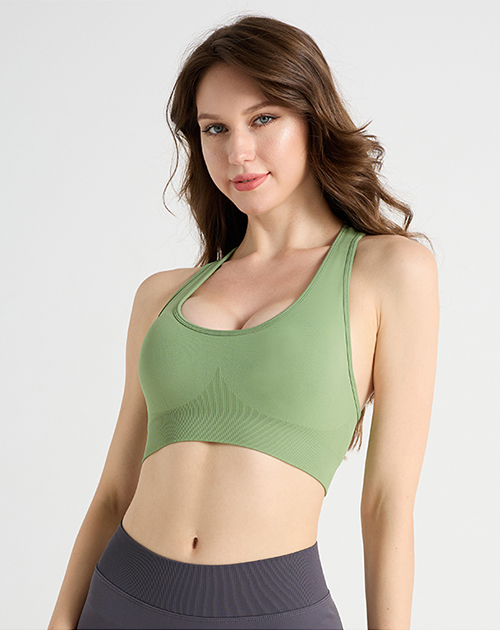
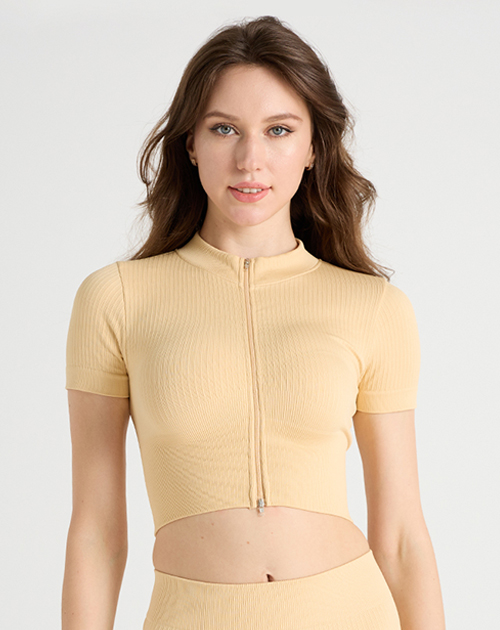
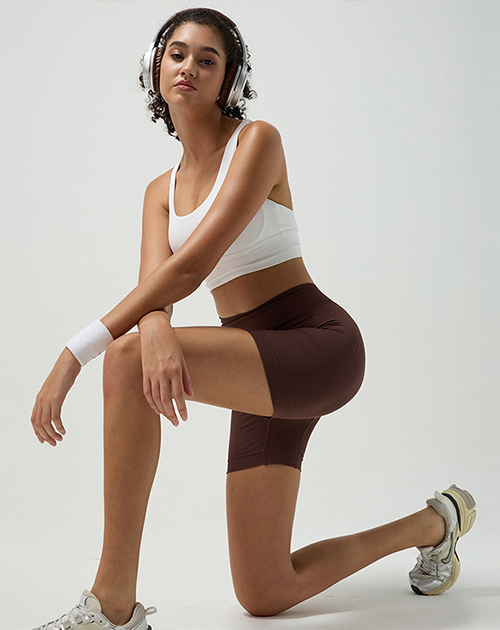
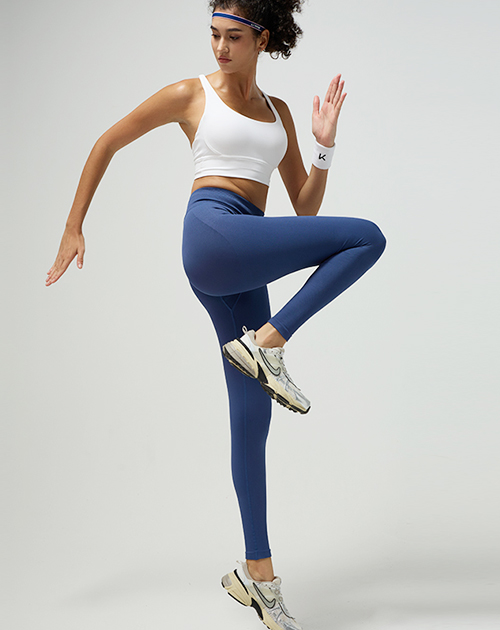
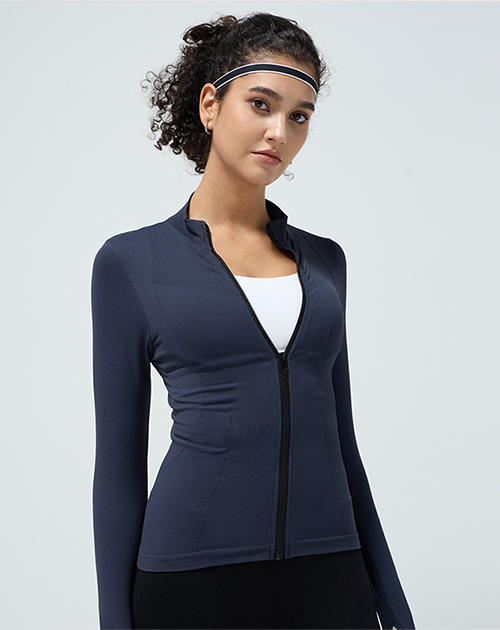
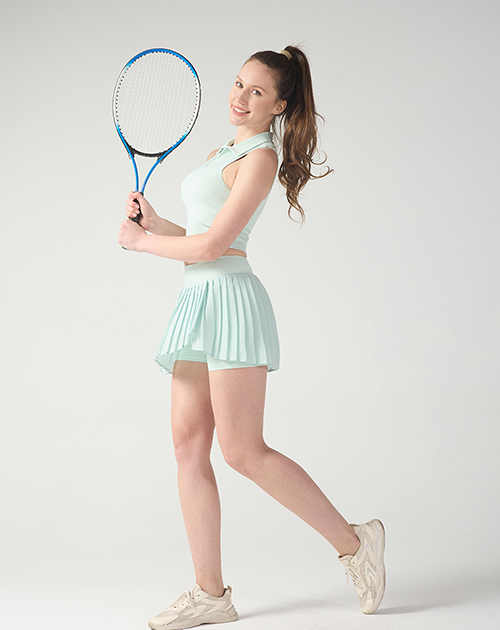
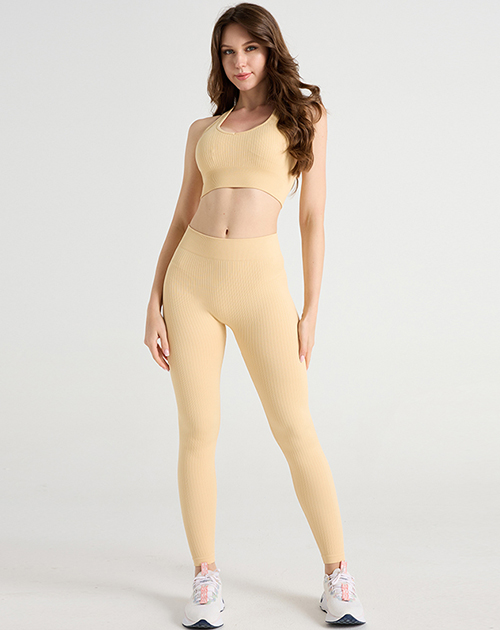
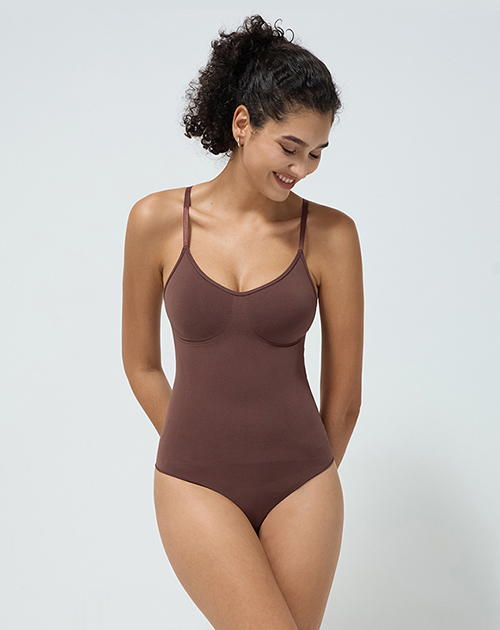
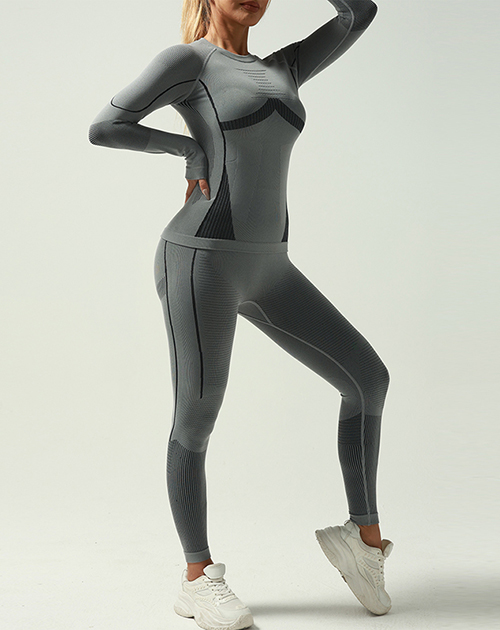
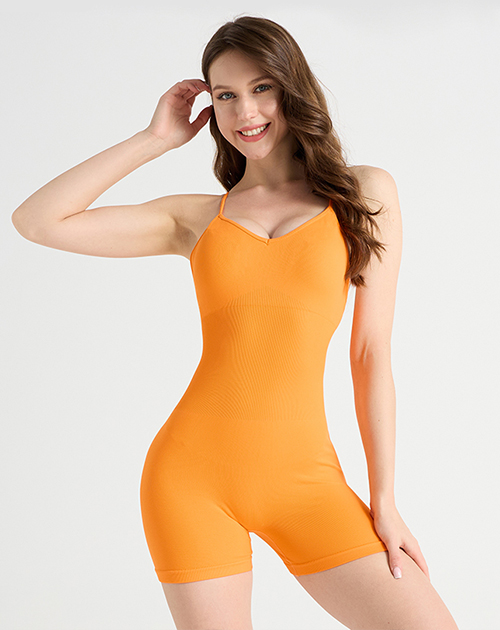
There is that familiar feeling many people recognize: you slip into a pair of leggings, move once, and notice right away that nothing digs in, nothing rides up, and the material simply follows your body like an extension of yourself instead of fighting it. That smooth experience comes from careful decisions about materials, how the piece is put together, and its overall shape — and knowing what goes into those choices helps turn a pair you reach for constantly into one that gets pushed aside after a few tries. Yongxing High-waisted Yoga Pants Seamless fit right into this group of carefully considered pieces, where the build of the garment really shapes how it performs and feels day after day.
Before diving into what makes them comfortable, it is useful to understand these two features clearly — since they involve different aspects of design that combine effectively.
High-waisted describes the height of the waistline: the band rests at or above the narrowest part of your midsection, rather than sitting lower on the hips or around the belly. This is about shape and placement. It affects how support is spread out, how much coverage there is as you bend and stretch, and whether the waist tends to slip down when you are active.
Seamless refers to the way the main fabric is made: the body of the leggings is produced as one unbroken tube through knitting, instead of being cut into separate pieces and sewn along the sides or other areas. This is a production choice. It gets rid of the raised lines and extra layers that regular seams leave against your skin.
A quick comparison helps frame both terms:
| Feature | High-Waisted Seamless | Mid-Rise Traditional |
|---|---|---|
| Waistband placement | At or above natural waist | Below natural waist |
| Panel construction | Continuous knit body | Cut and sewn panels |
| Pressure points | Distributed broadly | Concentrated at seam lines |
| Rolling tendency | Lower | Higher during movement |
| Surface against skin | Smooth, uniform | Raised seam ridges possible |
These elements are distinct but support one another well. The higher waist helps distribute pressure more evenly across a larger area. The seamless approach cuts out points where seams might rub or press in. When combined, they help create leggings that hold their position and stay comfortable without drawing attention to themselves — basically the core of what makes activewear feel good to wear.
The type of fibers and the knitting technique largely control the softness, flexibility, and air flow you notice when wearing them. Getting a sense of these basics explains why leggings that appear alike on the hanger can feel so different once on.
Most active leggings rely on a mix of synthetic materials. The usual ones are polyamide (often listed as nylon) and polyester, paired with some amount of elastane or spandex. Each brings its own characteristics:
The balance of these fibers makes a big difference. Too much elastane can make them feel overly snug and restrictive; too little leads to a looser fit that does not hold up well after stretching. A thoughtful mix gives enough give for full range of motion while snapping back reliably — similar to a surface that rebounds cleanly rather than staying stretched out.
The knitting pattern and any added surface treatment play a role too. A denser knit with a lightly brushed or softened outer layer often feels especially plush compared to a plain knit. That brushed texture is frequently described as buttery. Some knits include small textures that help air circulate better without sacrificing thickness or coverage.
A quick tip for checking in person: Rub a bit of the fabric between your fingers — it should glide smoothly without roughness or uneven spots. Gently pinch and let go; it ought to bounce back right away instead of keeping the crease.
This is a fair question to ask straight out, since "seamless" gets thrown around a lot in product descriptions and does not always mean the same thing. The straightforward answer is yes, real seamless construction noticeably improves how the leggings feel — provided the overall production quality backs it up.
Conventional leggings start as flat sheets of fabric that are cut into panels and then stitched together. Each seam line leaves a raised edge on at least one side. In places where the body bends and rubs a lot — along the inner thighs, behind the knees, or in the crease under the glutes — those raised lines create friction with every motion. During a longer workout, that repeated rubbing becomes something you notice. In leggings with heavier overlocked or flatlock seams, it can even leave temporary marks on the skin afterward.
Seamless pieces, on the other hand, are produced on circular knitting machines that shape the entire body of the legging as a single continuous tube. That leaves the main surface smooth and even, without any joined seams running through it. The advantages extend past simply removing those friction points:
One honest note: seamless knitting alone does not ensure a great product. If the yarn is low-grade or the knit is too loose, the leggings can still stretch out, bag at the knees, or lose their shape after a few wears and washes. The seamless approach works best when it is combined with solid fiber choices and even knitting throughout.
The difference comes down to how the body moves and where pressure lands, along with a practical sense of security during activity.
From a mechanical standpoint, pressure distribution makes the biggest impact. When the waistband rests at or just above the narrowest part of the torso — that natural indentation above the hips — it can spread its grip over a wider, more even area. A lower-rise waistband sits on the rounded part of the hips, which gives it less stable surface to hold onto and makes it more likely to roll inward or slip during bends and reaches. A higher waist, placed where the torso is straighter and more consistent, tends to stay put with gentler tension.
Coverage plays a role too, especially when you are moving dynamically. A high waist keeps the lower back covered in forward bends and holds everything in place during jumps, twists, or inversions, so there is less need to tug or readjust. That lack of interruption — not having to think about the clothing — is a big part of why many people say the leggings start to "disappear" once they are on and working right.
Within High-waisted styles, the way the waistband is built makes a real difference:
| Waistband Type | Feel | Common Issue |
|---|---|---|
| Separate sewn elastic band | Firm hold | Can dig or roll at top edge |
| Folded fabric waist (double layer) | Moderate hold, smooth edge | Can feel thick or hot |
| Integrated knit waistband | Gradual compression, smooth transition | Requires quality yarn to hold shape |
| Wide waistband with inner silicone grip | Strong hold, stays put | Can feel restrictive if too tight |
For general use, an integrated knit waistband that offers graduated compression often strikes the best balance between staying power and all-day comfort. If you catch yourself constantly pulling the waistband up during a session, it usually points to the band being too loose, too narrow for your torso, or built in a way that does not match your proportions.
This question comes up often because it directly affects whether the leggings become a reliable part of your routine. The answer hinges on three related elements: how high the rise sits, the construction of the waistband, and how accurately the size matches your body.
A true High-waisted design positions the band above the natural waist and takes advantage of the torso's slight taper to help it anchor. When the waistband is wide enough and uses fabric with strong recovery, it usually holds steady through deep squats, lunges, jumps, or even inversions. Rolling or slipping is more likely when:
A quick way to test this in the fitting room or right after unboxing is the squat check: drop into a full squat, then stand back up a few times. If the waistband shifts downward, rolls over, or the fabric bunches at the top, it is a sign the fit or construction is not quite right for your shape in that size.
The answer is largely yes, with some fitting nuances worth knowing.
For long torsos: A very high rise may sit uncomfortably close to the lower rib cage. Look for a waistband that ends a few centimeters below the floating ribs — enough to feel anchored but not constricted. Measure your torso length and compare it to the garment's rise measurement when available.
For shorter torsos: Standard high-rise garments often work well because the waistband covers more of the available torso real estate, distributing pressure broadly.
For curvy hips: Look for waistbands with significant horizontal stretch and elasticity so the band accommodates the hip-to-waist ratio without digging. Seamless construction with a gusseted crotch area also helps reduce pulling and twisting.
For activity types:
High-waisted Yoga Pants Seamless are among the most versatile activewear designs precisely because the construction — smooth surface, no irritating seams, stable waistband — translates across activity types.
How Should You Size These to Get the Comfort You Want?
Sizing seamless leggings can feel different from regular pants because of the high stretch factor and because comfort depends partly on how compressive or relaxed you want the fit to be.
A few straightforward guidelines:
The measurements that usually matter most are hip circumference and inseam length. Waist size alone is less telling here since the stretch allows one size to fit a fairly wide range of waists comfortably.
When made thoughtfully, yes — seamless leggings tend to handle both issues better than traditional stitched styles.
Chafing comes mainly from repeated rubbing, either between skin and fabric or where layers fold and slide against each other. Without raised seam lines, the continuous knit spreads contact more evenly and cuts down on those concentrated friction zones. A shaped crotch area further reduces the back-and-forth tension that stitched inseams can create with each step.
Visible panty lines are reduced because there are no seam edges to create ridges under clothing. The smooth, unbroken surface helps everything lie flatter. That said, the knit still needs to be dense enough to stay opaque — a very thin or open structure might let lines show through in certain lighting even without seams.
How comfortable leggings feel during activity comes down to how well the fabric deals with heat, sweat, and skin contact.
Breathability depends on the spaces within the knit and the fiber properties. A denser knit usually offers more support and coverage but lets less air pass through. Some designs add subtle surface textures that help air move without making the fabric see-through.
Moisture handling relies on how the fibers pull sweat away from the skin to the outside where it can spread and dry faster. The noticeable difference is between fabric that sticks and clings when damp versus fabric that feels relatively dry to the touch soon after sweating — that comes mostly from fiber type and surface treatment rather than how thick the material is.
Friction and odor are influenced by similar elements: a smoother finish lowers rubbing against skin, and certain fibers resist bacterial buildup that leads to smells.
A handful of features do not always get mentioned in listings but noticeably affect daily wear:
In-store, this quick routine covers the essentials in just a couple of minutes:
Online, pay attention to recurring phrases in reviews such as "stays in place the whole workout," "no rolling down," or "no red marks afterward" — those tend to be more telling than star ratings. Photos showing the waistband interior, real stretch examples, and customer shots in everyday lighting usually give a clearer picture than polished studio images.
Comfort in High-waisted seamless yoga pants comes from the way several choices work together rather than any one standout feature. The fibers set the tone for softness and lasting stretch. The knit pattern balances support with freedom of movement. Seamless production takes away the main sources of rubbing that stitched designs introduce. The higher waist spreads pressure evenly and helps prevent slipping that can break focus during activity. Getting the size right turns all those material strengths into something that actually suits a particular body. These elements are interconnected, so a pair that gets only some of them right can still fall short. The encouraging part is that once you know what each piece contributes, the checklist becomes a dependable way to sort through options. The ideal pair feels quietly supportive — there when you need stability, gone when you want to move without thinking about it — and that is really the goal of good activewear.
Copyright © Jinhua Yongxing Knitting Co., Ltd.
 Seamless Yoga Sets


 English
 русский
 Español