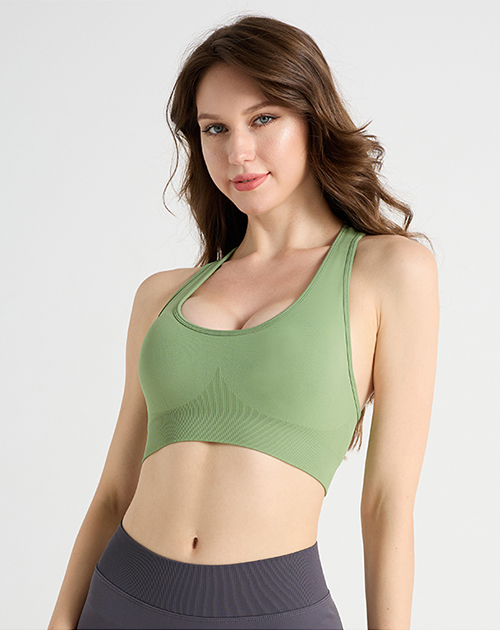
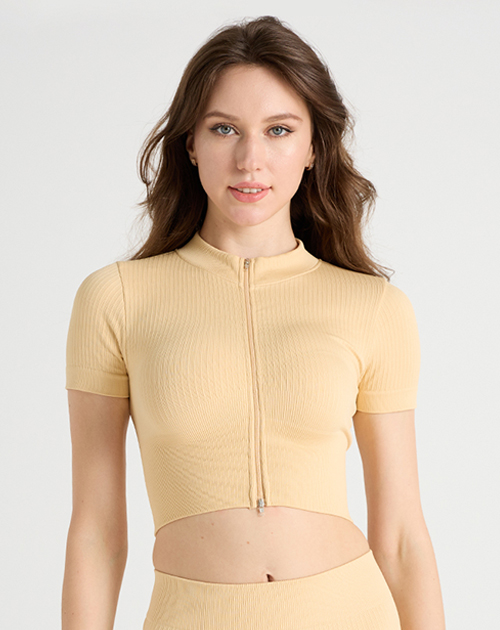
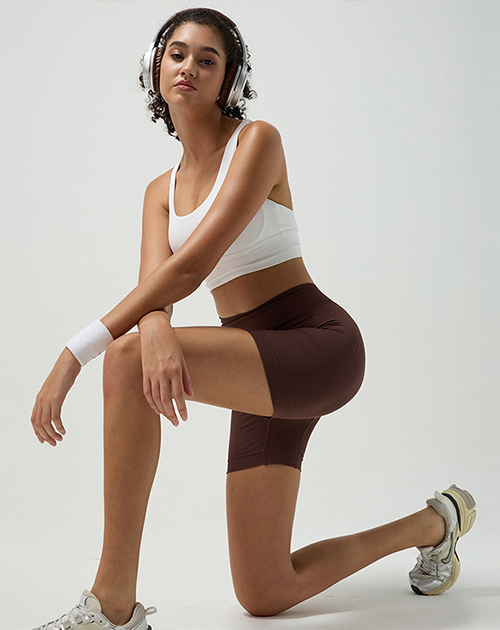
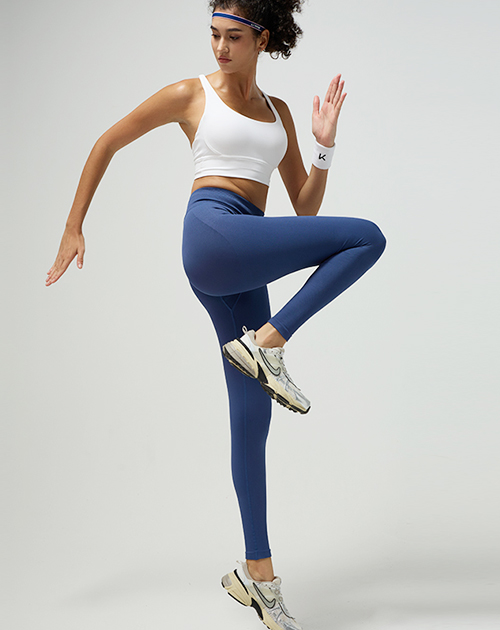
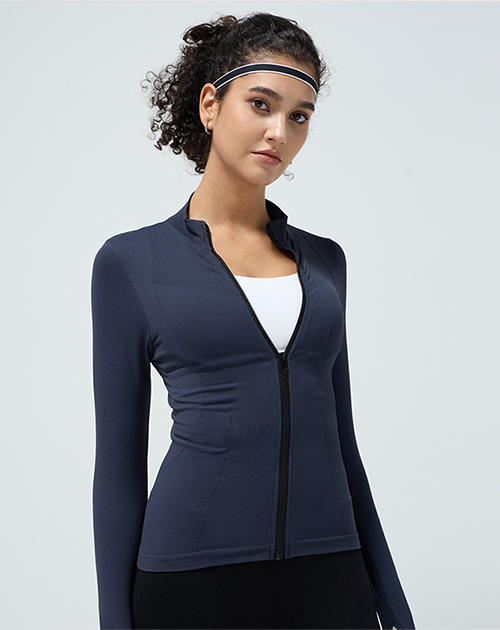
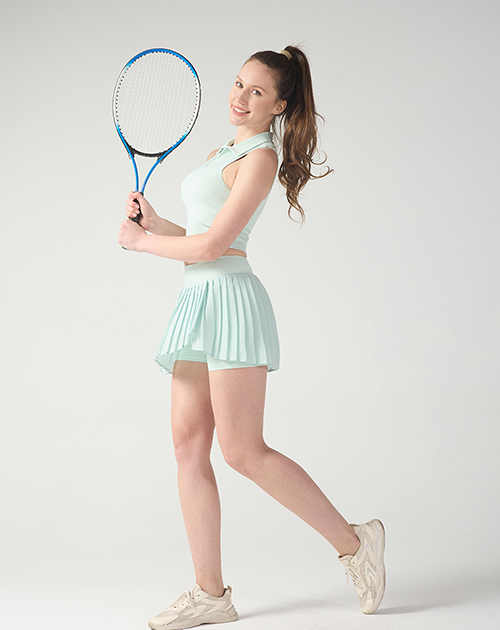
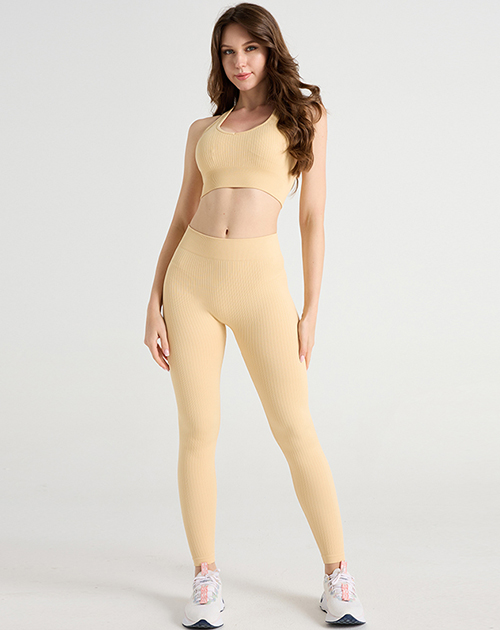
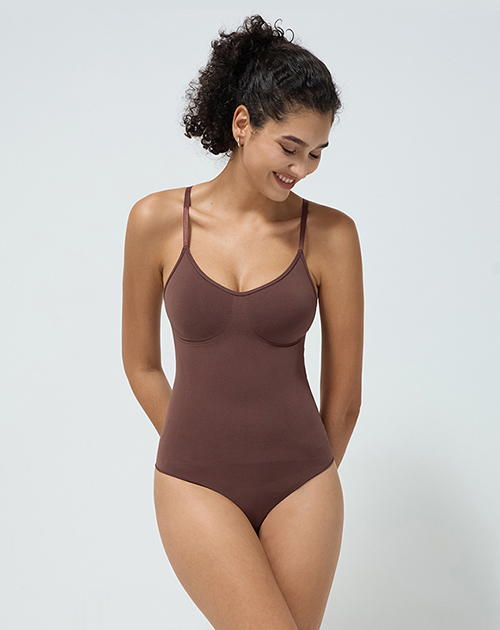
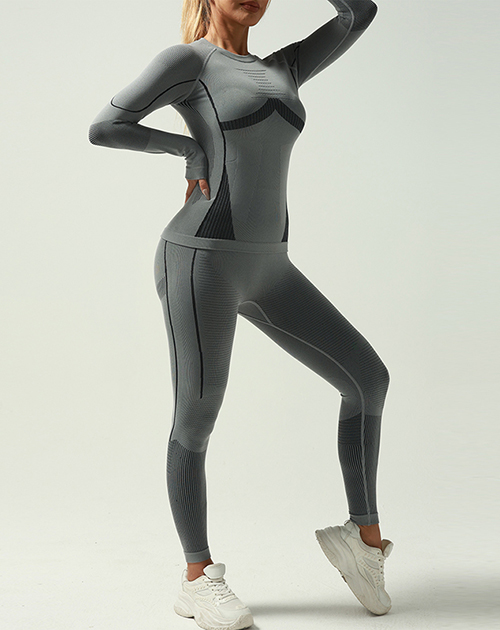
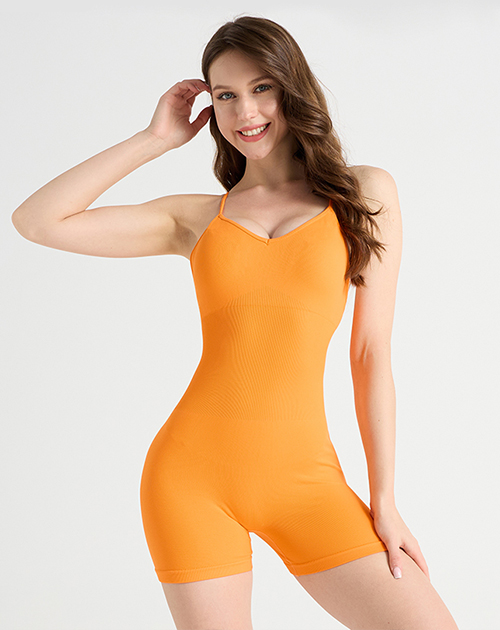
The activewear market talks a lot about seamless. Fewer conversations focus on what seamless actually means when the person wearing it has a D cup — or larger. That gap between marketing language and physical reality is where a lot of sourcing decisions go wrong. Seamless Sports Bras for Large Bust sizes aren't just regular sports bras with a different knitting technique. They're a distinct product challenge, one that asks a bra to do two things at once that don't naturally coexist: hold a larger chest firmly in place, and do it without creating the kind of pressure that leaves marks, restricts breathing, or makes a 45-minute workout feel like three hours.
Strip away the marketing and the definition is straightforward. A seamless bra is made without the stitched panel seams that run along the cup edges, side bands, or underbust in a traditional cut-and-sew garment. Instead of cutting separate pieces of fabric and joining them with thread, the body of the bra is knitted in one continuous structure — typically on circular knitting machines — so the seam lines simply aren't there.
For someone with a smaller bust, this is mostly a comfort upgrade. Smoother texture, less visible lines under fitted tops.
For a D cup and above? The stakes are higher. More fabric is pressing against the body. More surface area means more opportunity for friction, for edges to dig, for pressure to concentrate in the wrong places. A seam that barely registers on a B cup can leave a noticeable mark on a larger frame after an hour of movement. That's not a quality complaint — it's physics. Which is exactly why Seamless Sports Bras for Large Bust require a fundamentally different design approach, not just the same bra knitted differently.
Walk through most activewear ranges and the pattern is consistent. High-support styles rely almost entirely on compression — pressing the chest against the body as a way of reducing movement. It works, to a point. For smaller sizes, the pressure is manageable and the trade-off feels worth it.
Go up to a D cup or beyond and the math changes. Compression alone starts causing problems that support was supposed to solve.
Tight bands restrict breathing during sustained cardio. Straps carry more load than they're built for, digging into the shoulder. Fabric bunches at the center front or rides up at the back. And the seams — at the cup perimeter, along the underband, across the side panels — rub with every rep, every stride, every stretch. The bra isn't failing. It's just not designed for this body.
Buyers sourcing for this customer need to hold that tension clearly in mind. Reducing breast movement during activity and avoiding pressure-related discomfort are both non-negotiable. A product that does one without the other isn't solving the problem.
When evaluating Seamless Sports Bras for Large Bust, two structural approaches come up repeatedly. Understanding the difference changes what questions to ask a manufacturer.
Each cup is shaped to hold the breast individually — closer in principle to how an everyday bra works than how a typical sports bra does. Weight gets distributed across the full band and strap system rather than pressing inward from all sides. Shape is better maintained during movement. And because the design works with the body's natural form rather than against it, extended wear tends to be more comfortable.
The catch: this is harder to execute in seamless form. Shaping a true encapsulation cup through knitting rather than cutting and sewing requires technical investment in both machinery and pattern development. Not every manufacturer has done that work.
Simpler. A single layer or outer shell presses the chest inward as a unit. Fine for yoga, pilates, light training. At D cup and above, it starts to break down during anything high-impact — and over longer wear periods, the sustained pressure becomes the problem it was meant to prevent.
Most buyers will find that the better-performing products in this category use a hybrid: encapsulation cups for individual support, with a compression layer over the top for additional stability. When talking to suppliers, ask which structure their product actually uses. The answer matters more than what the product is called.
Material composition is where a lot of seamless sports bras either earn their price point or quietly underdeliver.
Nylon-spandex blends hold up well. Nylon keeps its structure through repeated washing and heavy use; spandex provides the stretch and recovery that lets the bra move without losing its shape. The combination also manages moisture reasonably well, which matters when the garment is worn close to the skin under exertion.
Polyester-spandex is the more common lower-cost option. It resists UV degradation better than nylon, which is useful for outdoor use, and it tends to be cheaper at volume. The trade-off is usually a slightly stiffer hand feel — less soft against skin, which can compound any pressure issues a poorly designed bra already has.
Beyond fiber type, knit density is worth paying attention to. A denser knit in the cup and underband area adds structure and support. Lighter knit zones in the back and sides allow the wearer to actually breathe and move. When a manufacturer treats the whole bra as a single knit weight, something is usually being sacrificed — and for large bust sizes, it's often support.
A few other things worth checking: whether the bra includes a foam or molded cup insert for shape (especially relevant if the retail buyer wants a defined silhouette), how the underband is finished and how wide it runs, and whether straps are adjustable. Fixed straps are a meaningful limitation for a diverse customer base.
Consumer returns and complaints in this category cluster around the same handful of issues. The band digs in. The straps leave marks. The cup edge creates a ridge. These aren't random quality failures. They're design outcomes — and they can be addressed before a product ever reaches a consumer.
A narrower underband concentrates pressure into a smaller strip of skin. Wider bands spread the load. For large bust sizes, this matters more than it does elsewhere in the category. Seamless bands where the elastic is integrated into the knit structure tend to stay flat and stable; applied elastic — sewn onto the edge after the fact — is more likely to fold, curl, or dig under tension.
Racerback and Y-back designs move the load away from the outer shoulder and distribute it across a wider section of the upper back. Wider straps, and padded ones where possible, reduce the point pressure that causes digging during longer sessions. A thin spaghetti strap might look fine in a flat lay; it's a different experience after an hour of running.
Even fully seamless bras have some kind of edge finish at the top of the cup. Soft, low-tension flat elastic here makes a real difference. High-rebound elastic at the cup edge can act almost like a wire — pressing in rather than conforming.
This one is underappreciated. A bra marked "D cup" that was graded by scaling up a medium pattern isn't actually designed for a D cup body. True size grading for extended sizes means adjusting cup depth, band length, and strap placement independently — not just making everything proportionally larger. Buyers should ask manufacturers how their grading was developed, not just what sizes they offer.
Stretch without recovery is just stretch. After a workout — or after repeated washing — a low-recovery fabric loses its ability to spring back to shape. The band starts to slip. The cups sag. Support disappears. A simple pull test on a sample tells you a lot about how a fabric will behave over time.
Sourcing Seamless Sports Bras for Large Bust well requires a conversation that goes beyond looking at samples and confirming MOQ.
The machinery question matters. Not all seamless knitting equipment can execute the knit density variation or cup shaping required for a high-support product. Ask what machines are in use and whether they support zoned knitting.
Pattern development is another real differentiator. Does the manufacturer have existing graded patterns for D cup and above, or would you be starting from scratch? Developing grading from zero adds time and cost — and if the manufacturer hasn't done it before, the risk sits with the buyer.
Ask about wear testing. How does this product perform over a full workout, at a specific cup size, with a specific fabric weight? If the answer is vague, that's worth noting.
Finally: lead times for seamless styles are typically longer than cut-and-sew because machine programming is per style. Understanding that timeline upfront avoids problems down the line.
Jinhua Yongxing Knitting Co., Ltd. works with buyers developing seamless activewear, including high-support styles for larger bust sizes. Yongxing's production setup includes dedicated seamless knitting machinery with zoned knit capability, and the team has experience across both standard and extended size grading. For buyers sourcing Seamless Sports Bras for Large Bust who want to discuss construction specifics, sample development, or production timelines, reaching out to Yongxing directly is a practical starting point.
Copyright © Jinhua Yongxing Knitting Co., Ltd.
 Seamless Yoga Sets


 English
 русский
 Español