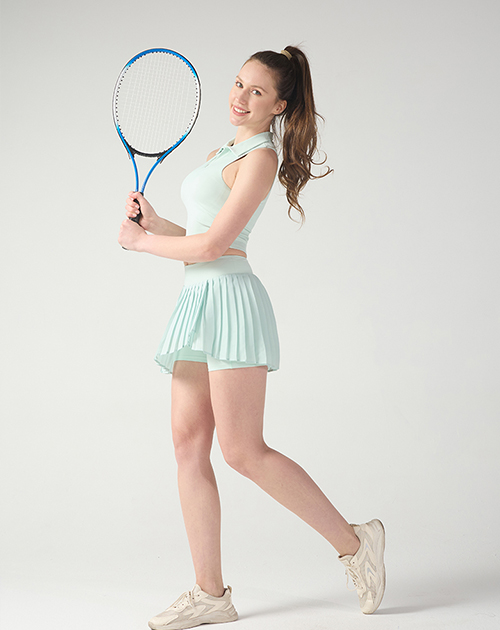
Tennis skirts are no longer limited to sports stores or professional court wear collections. They have gradually found a place in everyday fashion. A pleated skirt paired with a loose T-shirt, for example, may be worn for a casual outing as easily as for a tennis session. This change has brought new customers into the market and given wholesale buyers more styles to consider.
But a wider market also makes product selection less straightforward. A skirt designed for regular tennis players may not appeal to someone buying it for casual wear. Some customers care about built-in shorts and freedom of movement. Others pay closer attention to the cut, color, and how the skirt looks with other clothing.
For wholesalers, the challenge is not simply finding attractive products. It is understanding which details matter to different buyers and whether a supplier can maintain those details across an entire order. Fabric, fit, stitching, sizing, and customization all deserve attention, although their importance may vary from one collection to another.
Put two tennis skirts side by side in a product photo and you'd struggle to tell them apart. Pick them up and it's a different story. One feels light and gives easily. The other is a bit stiff, a bit heavy, and you can guess how it will feel forty minutes into a match.
That gap matters more in wholesale. A retailer can't try on every style, and their customers will wear these skirts for actual sport. A skirt that looks great on the hanger but feels off on court rarely earns a second order.
Stretch comes first. Tennis means lunging, pivoting, bending to pick up a ball, and sprinting to the net. If the fabric fights the body on any of those, the wearer notices right away. Breathability and moisture handling come next, especially for people who train for an hour or two at a time.
Then there's what happens after washing. A skirt can feel perfect out of the bag and still go wrong in a few weeks. It may wrinkle, sag at the waist, or turn slightly see-through. Customers rarely blame the laundry. They write a bad review, or they send it back.
Who the skirt is for should drive the fabric choice. A competitive player wants something different from a customer wearing it to brunch. Some collections try to serve both with one design. It can work, but only if the fabric and construction (lining, waistband, shorts underneath) actually hold up in both settings.
The simplest safeguard is to ask for samples. Stretch the fabric and see whether it snaps back. Feel the weight. Hold it up to the light. Wear it, move around, wash it once. A product description will tell you the composition, but it won't tell you how the skirt behaves.
Pleated tennis skirts remain closely associated with traditional court clothing. Their shape creates movement and gives the garment a recognizable sporty appearance. However, wholesale collections are not limited to pleated designs.
A-line and flared skirts appeal to customers who prefer a softer silhouette. Straight-cut designs, meanwhile, can fit into more understated sportswear collections. These styles may look less traditional, but they can attract shoppers who want tennis-inspired clothing without a distinctly athletic appearance.
The choice often depends on where the products will be sold. A specialist sports retailer may focus on practical court wear. A fashion retailer could be more interested in skirt length, pleat shape, and how easily the garment pairs with crop tops, sweatshirts, or casual footwear.
Buyers should also consider whether the silhouette suits the intended customer group. A very short skirt may appeal to some shoppers but be unsuitable for others. A wider hem can create a flowing appearance, although the design still needs to remain comfortable during movement.
It is worth looking beyond individual product trends. Retailers often need a collection that works together rather than a group of unrelated designs. Offering several silhouettes in coordinated colors can make it easier to build a consistent range.
A common sourcing mistake is to select styles based entirely on supplier catalogues. These catalogues show what is available, not necessarily what customers in a particular market want. Reviewing existing sales, customer feedback, and competing product ranges can provide a more useful starting point.
For many tennis players, built-in shorts are not a decorative extra. They are part of the garment's practical value. They provide coverage during running, stretching, and bending, allowing the wearer to focus on the activity rather than adjusting the skirt.
Yet the presence of inner shorts does not automatically mean the design is comfortable. Their fit can make or break the product.
If the inner layer is too tight, it may restrict movement or create pressure around the thighs. If it is too loose, it can shift or bunch up during exercise. The fabric also needs to work with the outer skirt. Differences in stretch or weight may cause the two layers to move unevenly.
Buyers should pay attention to the length and position of the inner shorts. A design that provides insufficient coverage may not meet customer expectations. On the other hand, an inner layer that extends too far below the outer skirt can change the intended appearance.
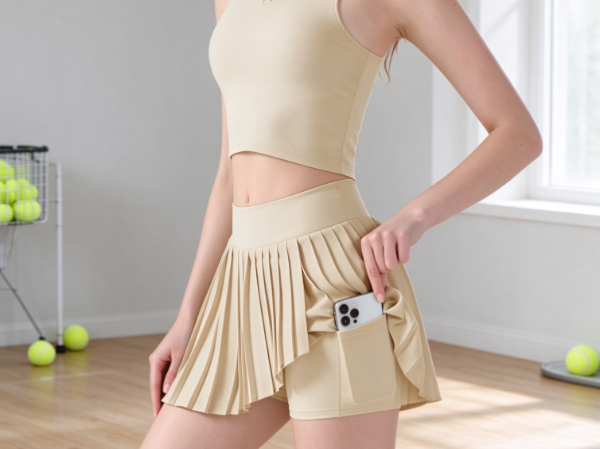
Some manufacturers add pockets to the inner shorts. This is particularly useful for tennis players who need to carry balls during a game. However, the pocket should not pull the fabric downward or become uncomfortable when filled.
Not every wholesale tennis skirt needs this feature. Some fashion-oriented designs are intended for casual outfits rather than sports activities. Adding built-in shorts to every style may increase production complexity without offering a clear benefit to every customer group.
The more useful question is whether the feature matches the product's intended purpose. Buyers should make that decision before discussing detailed specifications with a supplier.
Pockets rarely dominate the appearance of a tennis skirt, but they can influence how customers use it. A player may want somewhere to store a tennis ball. Someone wearing the same skirt for a walk may simply need space for a small personal item.
Side pockets and inner shorts pockets are common options. Their usefulness depends on placement, depth, and how securely they hold the contents. A pocket that is difficult to reach or causes the fabric to bulge may add little value.
| Design Detail | Potential Customer Benefit | What Buyers Should Check |
|---|---|---|
| Side pockets | Convenient storage for small items | Position, depth, and appearance |
| Inner shorts pockets | Space for tennis balls or personal items | Stability and ease of access |
| Hidden pockets | Less visible storage | Opening and practical use |
| Wide waistband | A more secure-feeling fit | Comfort and elasticity |
| Pleated panels | A familiar tennis-inspired look | Fold consistency and shape retention |
Small details can also create differences between otherwise similar products. A waistband that stays in place, a neatly finished hem, or pleats that retain their shape may have more influence on the wearing experience than an additional decorative feature.
This is where product development discussions become important. Buyers sometimes request several extra details because they want their collection to look distinctive. However, every added feature needs to serve a purpose. Too many design elements can make a skirt visually crowded or unnecessarily complicated to manufacture.
A simpler design with well-considered construction may be more suitable for a broad retail range.
A sample can look attractive when it arrives, but wholesale buyers need to think about what happens when the same product is manufactured in larger quantities. A single well-finished garment does not guarantee that every item in an order will have the same appearance and fit.
This is one reason construction deserves closer attention during supplier evaluation.
Check the seams around the waistband, side panels, and inner shorts. These areas experience movement and repeated stretching. Uneven stitching or loose threads may not seem serious on a sample, but they can become noticeable when products are worn or washed.
Pleated designs require particular care. If the folds are inconsistent, the skirt may look uneven when displayed or worn. The hem also matters. Poor finishing can cause edges to curl or lose their shape after washing.
Washing tests can reveal problems that are difficult to identify through a visual inspection. Fabric shrinkage, color fading, and changes in elasticity may affect the final product. Buyers sourcing large quantities should consider checking these aspects before approving production.
There is also a difference between appearance quality and practical durability. A skirt can look neat but still develop problems after regular use. For activewear, the way a garment holds up over time is part of the product experience.
A useful supplier discussion should cover how samples are approved, how production is inspected, and how differences between sample and bulk orders are handled. These questions are particularly relevant for businesses planning repeat purchases.
Sizing problems can create unnecessary pressure for retailers. Even when a tennis skirt has an appealing design, customers may hesitate to purchase if the fit is unclear or the available sizes do not match their needs.
One issue is that size labels are not always consistent between manufacturers. Buyers should not assume that a medium from one supplier will fit like a medium from another. Actual measurements are more useful than labels alone.
Waist, hip, and skirt length measurements should be reviewed together. For designs with built-in shorts, the inner layer needs to be considered as well. A skirt may fit comfortably around the waist but feel restrictive through the thighs.
Size charts should also be checked against physical samples. This can help identify differences between the stated measurements and the actual garment. For wholesale orders, it is worth agreeing on the approved sizing reference before production begins.
Color selection involves a different kind of judgment. Black, white, and navy are familiar choices in tennis-inspired clothing. They can fit into basic sportswear collections without requiring customers to follow a particular fashion trend. Pastel shades and brighter colors, however, can bring variety to a collection.
The challenge is deciding how many colors to carry. Too few options may make a collection look limited, while too many can complicate inventory planning. Retailers need to consider their customer base, sales channels, and the other products available in the same range.
Color samples are useful when the final appearance matters. Fabric texture and lighting can make a shade look different from its digital image. For repeat orders, keeping an approved color reference can also help reduce inconsistencies.
A supplier's product range is only part of the decision. Communication, sample development, production management, and quality control can all influence how smoothly an order moves forward.
Some buyers focus heavily on unit prices during the initial inquiry. Price is important, but a low quotation does not explain how the supplier manages fabric selection, sizing consistency, or production defects. Businesses need to understand what is included in the offer before comparing suppliers.
Sample development is a useful starting point. It allows buyers to check the actual garment and discuss adjustments before placing a larger order. If the waistband needs changing or the inner shorts require a different fit, these details can be addressed during product development.
Customization may also matter to businesses building their own sportswear collections. Depending on the supplier's capabilities, changes may include fabric choices, colors, pocket placement, labels, packaging, and logo application. Buyers should clarify which changes are available and whether they affect order conditions.
The following points can help structure supplier discussions:
| Supplier Consideration | Questions Worth Asking |
|---|---|
| Sample development | Can the supplier provide samples before bulk production? |
| Fabric sourcing | What fabric options are available for different uses? |
| Size consistency | How are garment measurements checked during production? |
| Customization | Can colors, labels, pockets, or other details be adjusted? |
| Quality inspection | Which parts of the garment are checked before shipment? |
| Order conditions | What are the minimum order and repeat-order requirements? |
| Defect handling | How are quality issues addressed after delivery? |
Communication is often more important than buyers expect. A sourcing project may involve several rounds of comments on fit, color, and finishing. If product requirements are not understood clearly, small misunderstandings can affect the final order.
Businesses should also consider whether the supplier can support future orders. A product that sells well may need to be reordered. Consistent materials, sizing, and construction become important when the same style returns to a collection.
The growing interest in athleisure has changed the way tennis skirts are presented and sold. They are no longer marketed only as clothing for playing tennis. Many retailers now place them alongside casual activewear, lightweight tops, and other everyday garments.
This shift has influenced product design. Customers may want the freedom of movement associated with sportswear but prefer colors and silhouettes that work outside the court. A skirt with built-in shorts, for instance, can serve an active purpose while still fitting into a casual outfit.
Online shopping has also changed the way buyers assess products. Customers often discover tennis skirts through short videos, outfit photographs, and social media posts. A distinctive design may attract attention, but the actual fit and fabric determine whether the product meets expectations after delivery.
For wholesalers, this creates a need to understand more than one customer group. Regular players may ask about coverage and storage. Casual shoppers may pay closer attention to styling and comfort. Retailers serving both groups need products that reflect these different expectations.
The market is also becoming more varied in terms of product presentation. Some collections retain traditional tennis styling, while others use simpler cuts and softer colors. Rather than following every visible trend, buyers need to decide which direction makes sense for their own customers.
Wholesale tennis skirt sourcing is therefore becoming a product-planning decision as much as a purchasing task. The details that matter are not identical for every business. A specialist sports retailer may prioritize movement and construction, while a fashion retailer may focus on silhouette and coordination. Understanding that difference can shape the entire sourcing process, from sample selection to the final product range.
Copyright © Jinhua Yongxing Knitting Co., Ltd.
 Seamless Yoga Sets


 English
 русский
 Español